You make your own choice, just know the facts.
Many goat moms become very defensive regarding this topic. Lets always respect each other and allow each of us to make our own decisions for our own homes and land. I am only here to provide information and you are welcome to take it or leave it. My decision may not have been the “correct” decision, but it is the one that I made. We all live and learn every day.
Most goats are born with horns. It is very rare that a goat is born without horns, although sometimes this can occur when a breed is naturally polled (born hornless). The decision of disbudding (removing horns) has pro’s and con’s for horned and hornless goats. This is a very hard topic for me!
The functions of horns and why I decided to keep the horns on my does:
1. PART OF BODY: The goats horns are part of their skull and their skin.
2. DEFENSE: Horns can provide a protection against predators. Some people will tell you this is not true that that goats are prey animals and will run and hide. This is not accurate. Many goats, like your Queen Bee will fight ANYTHING to prove she is is the alpha. Even if that means she dies. I have personally witnessed this.
3. TEMPATURE REGULATION: Horns help with regulating heat in hot weather.
4. VASOCONSTRICT: Horns vasoconstrict in the cold to keep the goat warm.
The functions of horns I do not appreciate.
1. SOCIAL HIERARCHY: Horns establish dominance in the goat, animal and human pecking order within their herd. This could mean your dog, pigs, children, you and other goats. It depends on if the goat sees you as part of their herd.
2. INJURY: Horns hurt when they are rammed into you or other animals. Goats can have fights with the horns or even accidental contact with each other.
3. HAZARDS: Fences, structures or other objects like a net can become caught on the goats hard and be potentially life threatening.
4. CHALLANGES: Horned goats are harder to work with. When milking, feeding or moving to a new area the goat can be hard to manage when they can knock you with their horns. Even when it is not on purpose. One of mine, Zarah, ran out the gate by the pig area and went straight for the pig corn. This is a no no so I went running after her. As I was leashing her to bring her back into the coral area she lifted her head and hit me on the chin. This was a total accident but injuries can still occur.
GOAT HORN FACTS:
- Both male and female goats can have horns, although horn size and shape often vary between breeds and individuals.
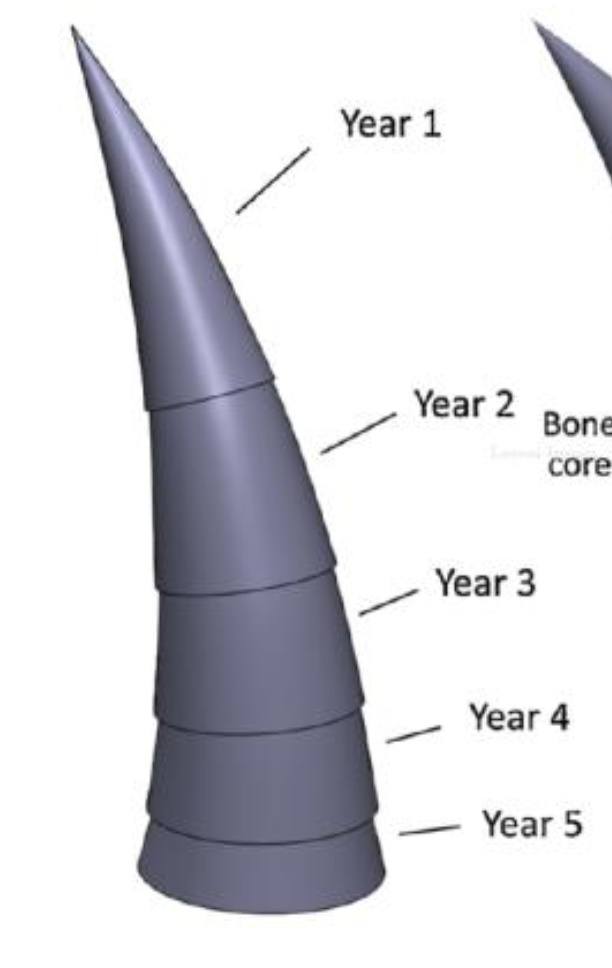
- Goat horns are permanent structures that continue to grow throughout the animal’s life. Unlike antlers, horns are not shed and regrown annually.
- Horns serve several important functions, including defense, social communication, establishing dominance, and helping dissipate body heat through their blood supply.
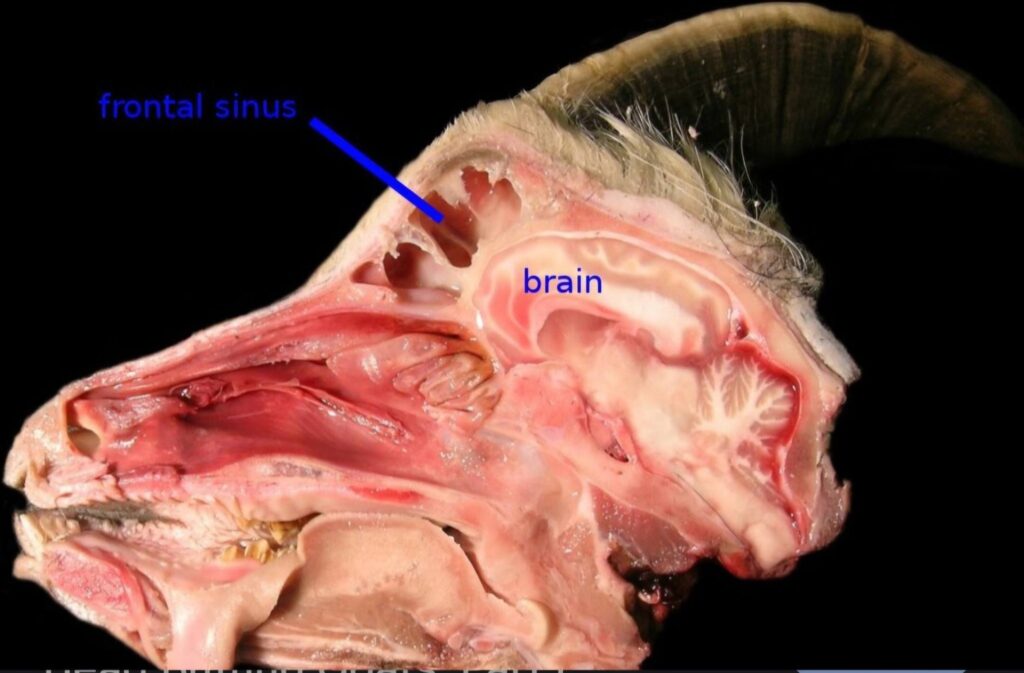
- A goat’s horns are connected to the skull and communicate with the frontal sinus.
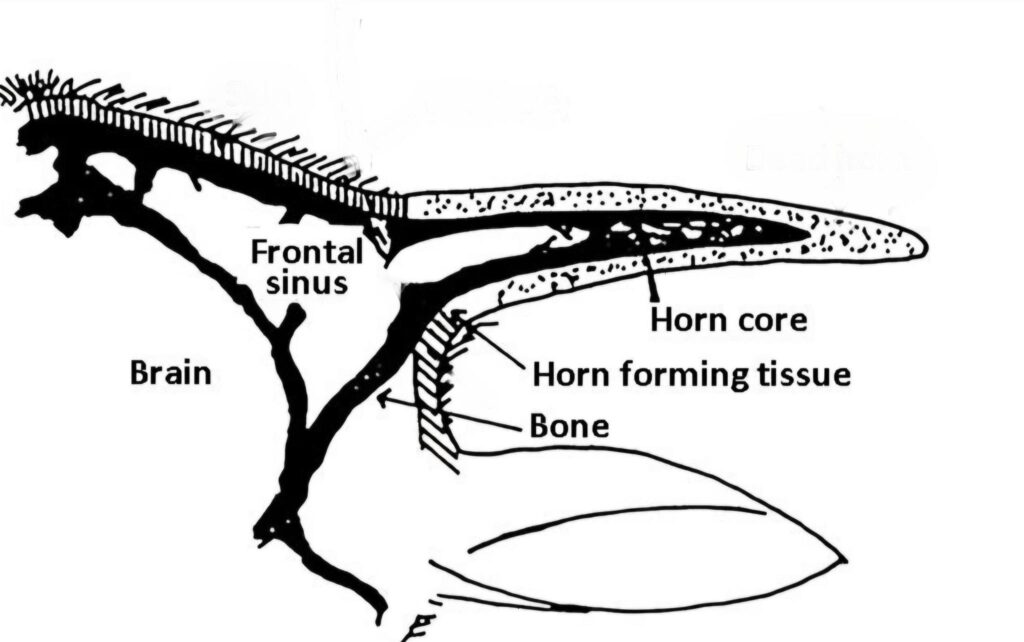
- The horn is an extension of the frontal bone of the skull and contains a hollow area called the cornual diverticulum, which is part of the frontal sinus system.
- The outer layer of the horn is made of keratin, the same protein found in hair and fingernails. Beneath this protective covering is living bone and tissue containing blood vessels and nerves.
- Because horns contain living tissue, injuries to the horn can be painful and may result in bleeding, infection, or other complications.
- Goat horns occur in a variety of shapes depending on breed and genetics, including straight, curved, spiral, and corkscrew forms.
- Goats that are naturally born without horns are called polled. The polled trait is inherited genetically and, in some goat breeds, has been associated with an increased risk of Polled Intersex Syndrome (PIS) when certain breeding combinations are used.
- Disbudding is a management procedure used to prevent horn growth. It is typically performed during the first weeks of life by destroying the horn-producing tissue (horn buds).
- When performed correctly by trained individuals using appropriate methods and pain management, disbudding can be effective. However, complications can occur, including infection, incomplete horn removal, scur formation, and, in rare cases, serious injury.
- Scurs are abnormal horn-like growths that can develop when horn-producing tissue is not completely destroyed during disbudding. Scurs are usually smaller and less securely attached than normal horns.
- Proper horn management is important for goat welfare and should take into account the animal’s health, environment, housing, and handling practices.
You may decide if there are more pro’s to disbudding than keeping the horns. This was hard for me and I chose to still keep the horns because of ethical reasons. I understand both decisions and you have to make your own decision for your own home and land.
(Removing Horns) aka Disbudding: THIS IS DONE IN THE FIRST TWO WEEKS OF A KIDS LIFE.
From age 4-14 days. Disbudding is done to prevent the risks that can occur when having horns. The horn buds on kids during the first few weeks of life are cauterized. This can cause pain, stress and infection if not done correctly. After two weeks, horns on a kid will fuse to the frontal sinus, making it difficult to remove and harder than disbudding. If you wait until after the first two weeks this procedure is called dehorning. Disbudding is done with a hot iron or disbudding paste. (I have read that the paste burns very bad for a long time and not humane although I am not a vet and have never used the paste.)
Dehorning. Dehorning is when you remove horns after they have fused to the front sinus of the animal. (Anytime after two weeks of age. Dehorning at later ages may have negative effects on the animal’s performance due to the associated stress and trauma. Methods for disbudding and the process of restraining younger animals are also typically easier compared with restraining and dehorning older animals.
RISKS: During disbudding goats can still end up with scurs which is abnormally formed horn tissue due to improper disbudding. Goats can also end up with infection or injury or permanent trauma to the brain.
*All Rights Reserved By Aurora Acres* 2022